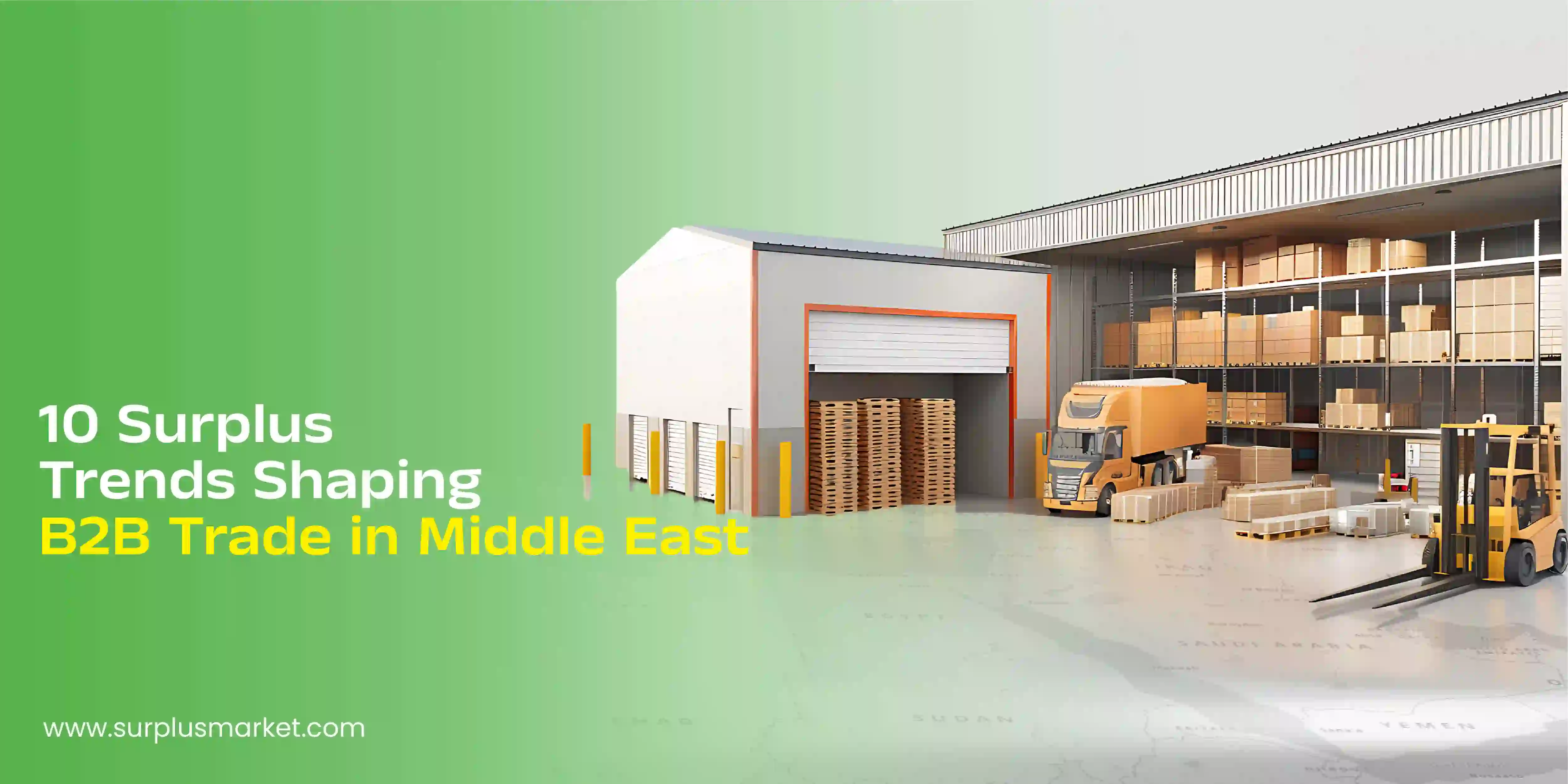

10 Surplus Trends Shaping B2B Trade in Middle East
Surplus trends in Middle East are transforming how businesses buy and sell excess goods, especially in B2B markets. With rapid industrial growth and expanding trade corridors, B2B surplus channels are gaining momentum across Gulf states. This shift is encouraging buyers and sellers to adapt to new patterns in inventory liquidation trends, overstock movement, and demand forecasting. In this blog, we explore ten surplus trends and some of the top surplus products driving B2B surplus trade across the region and explain how market players can benefit from these changes.
So, if you want to sell or buy excess inventory in Saudi Arabia, UAE, Qatar, and beyond, understanding these trends can help you make smarter decisions, move stock faster, and connect with reliable B2B partners across the Middle East.
Key Takeaways
- Digital platforms are driving transparency in overstock trading.
- UAE and Saudi Arabia are major hubs for surplus product movement.
- Construction materials, lighting, auto spares, and other categories are witnessing strong demand.
- Managing inventory aging has become crucial for better asset recovery.
- Sustainability and data-driven insights are shaping future buying habits.
1. Rise of Digital Surplus Platforms
Digital platforms have changed how excess inventory is discovered, evaluated, and bought. In the past, traditional auctions and offline brokers dominated surplus exchange, but now online marketplaces are making the process quicker and more open. These platforms give B2B surplus buyers in the UAE and the wider Middle East a chance to assess overstock products in the Middle East with detailed listings, images, and transparent pricing.
Platforms that list surplus goods online also reduce the time and effort businesses spend connecting with potential buyers. Anyone managing excess stock can upload items and find local or international buyers fast. For B2B surplus trade UAE, this availability of overstock trading platform UAE has made a noticeable difference in how fast inventory moves.
2. UAE & KSA Lead the Market
The United Arab Emirates and the Kingdom of Saudi Arabia are key drivers of surplus market growth in the region. These two economies have vast industrial sectors, complex supply chains, and significant imports of machinery, material, and equipment. They also see high rates of excess inventory in Saudi Arabia because companies frequently update operations, relocate facilities, or upgrade systems.
Dubai and Riyadh act as major redistribution points for excess inventory, allowing businesses to efficiently buy and sell excess inventory in UAE, while leveraging extensive buyer networks across Africa, Asia, and beyond. This leadership in trade makes the UAE and KSA hotspots for both buyers and sellers looking to access a broad inventory of overstock products in the Middle East.
3. Boom in Building Materials
Surplus construction materials demand is consistently high, thanks to ongoing infrastructure projects across the Gulf. Developers often end up with excess cement, tiles, or metal components when project scopes change or orders exceed requirements.
Buyers are actively searching for cost-effective solutions, leading to strong interest in surplus building materials wholesale listings. These products allow companies to reduce upfront procurement costs without compromising quality. If you are exploring ways to buy excess materials for upcoming projects, listings in this segment are worth reviewing. For specific products, such as overstock building materials or the top surplus construction materials in demand, dedicated platforms like Surplus Market offer verified listings and competitive prices.
4. Lighting & Electrical Demand
Lighting fixtures, electrical panels, wiring accessories, and similar items are among the most regularly traded surplus categories. Many businesses upgrade electrical systems to meet new standards or aesthetic changes, leaving behind surplus lighting inventories.
B2B buyers are attracted to these listings because they get branded, unused, or lightly used products at lower prices. If your company needs lighting solutions without high procurement costs, exploring surplus lighting products in bulk might be beneficial.
5. Growth in Auto Spare Surplus
The automotive aftermarket in the Middle East is massive, and surplus auto parts represent a growing segment within it. Dealerships, repair networks, and fleet operations often have spare parts they cannot use due to changes in models or over-ordering.
These surplus auto spare parts appeal to both workshops and distributors who want genuine products at reduced prices. Whether you deal in passenger vehicle parts or industrial vehicle components, this category offers consistent opportunities.
6. Smarter Inventory Aging
Inventory aging management Middle East has become a priority for companies that hold excess goods. Older inventory loses value over time, which can lead to bigger write-offs and losses. Smarter inventory aging strategies involve real-time dashboards, aging calculators, and push-to-market mechanisms that help sellers move inventory before value erodes.
Tools like an inventory aging Calculator give sellers a clear view of aging timelines and help forecast optimal liquidation windows. With better visibility, businesses can make informed decisions about pricing, discounting, and timing to preserve value.

7. Qatar’s Buying Surge
Qatar is experiencing increased demand for surplus goods, driven by sectors such as construction, hospitality, and energy. Buyers in Qatar look for cost-effective ways to source materials and parts due to project timelines and budget pressures.
Companies wishing to buy excess inventory in Qatar often find a mix of industrial, commercial, and infrastructure-related surplus listings. This growth reflects broader economic activity and shows how surplus trade can support faster procurement without premium pricing.
8. Verified Listings Matter
Verified listings are becoming essential in the surplus ecosystem. Verified items have confirmed descriptions, actual photos, and seller credibility checks. B2B surplus buyers want confidence that what they see online matches the product they receive.
Marketplaces with strong verification processes help reduce disputes, returns, and unexpected costs. Verification increases trust between sellers and buyers, particularly when transactions involve higher-value equipment or inventory. Hence, they can buy & sell excess inventory & overstock items by exploring active listings with trusted details and verified offers.
9. Sustainability Drives Trade
Corporate interests in environmental impact are influencing surplus trends in Middle East. Excess inventory that cannot be used often ends up in landfills or idle warehouses. When businesses sell these products through surplus routes, they reduce waste and improve resource efficiency.
Sustainability-focused surplus inventory buyers UAE prefer surplus goods because this approach lowers the need for new production and minimizes environmental strain. B2B surplus trade UAE and across the Middle East is gaining recognition as a smarter practice for asset use and waste reduction.
10. Data-Driven Buying
Data analytics is reshaping how surplus listings are priced, discovered and purchased. Buyers now use market insight tools that indicate demand patterns, pricing benchmarks, and historical trends. Sellers use data to set competitive prices and identify which products will likely liquidate fast.
This data-driven environment has made surplus trading more efficient, allowing surplus inventory buyers to access data-rich listings across categories. Predictive models help both buyers and sellers align expectations, resulting in faster deals and better match rates between supply and demand.
Key Challenges in the Surplus Trade Market
Despite the strong surplus trends in Middle East, several hurdles still exist. Logistics remains a core challenge because transporting bulk surplus items can be costly and complex. Standardization of product information is another issue because inconsistent listings make comparison hard.
Regulatory diversity across Gulf Cooperation Council (GCC) states may lead to different compliance requirements, influencing how goods are shipped or sold. Ensuring quality checks and after-sales support also requires more robust frameworks for larger transactions.

Future of B2B Surplus in Middle East
The future is promising for surplus trade in this region. Broader digital adoption, better integration of logistics players, and international demand will deepen the market. Real-time insights and improved user interfaces will make surplus listings easier to navigate.
Greater participation from institutional buyers and larger enterprises could make surplus channels a mainstream procurement route for industrial and commercial needs.
How SurplusMarket Supports B2B Buyers/Sellers
SurplusMarket offers a broad marketplace where suppliers and buyers connect efficiently. Sellers can list excess inventory with detailed information, manage ageing stock, and access a larger buyer base. Buyers can filter listings by category, condition, price, and location to find suitable overstock products Middle East that fit budget and quality requirements.
Additionally, the platform supports cross-border trade across key markets, enabling transactions in UAE, KSA, Qatar and beyond. This outreach helps both buyers and sellers maximize value from surplus listings.
FAQ
- What are the most in-demand surplus products in UAE and Saudi Arabia?
Construction materials, lighting and electrical items, machinery, and auto spare parts are among the most in-demand B2B surplus products.
- Is buying surplus inventory safe for B2B buyers?
Yes, it is safe when you choose platforms with clear product details, verification, and transparent communication with sellers.
- How can businesses calculate inventory aging before liquidation?
Businesses use inventory aging tools that track stock age, recommend pricing models, and forecast liquidation windows for better decision making.
- Why is surplus trade growing in Middle East?
Surplus trade is growing due to expanding industrial activity, cost sensitivity, increasing online marketplaces, and strong demand for overstock products that offer savings over new purchases.