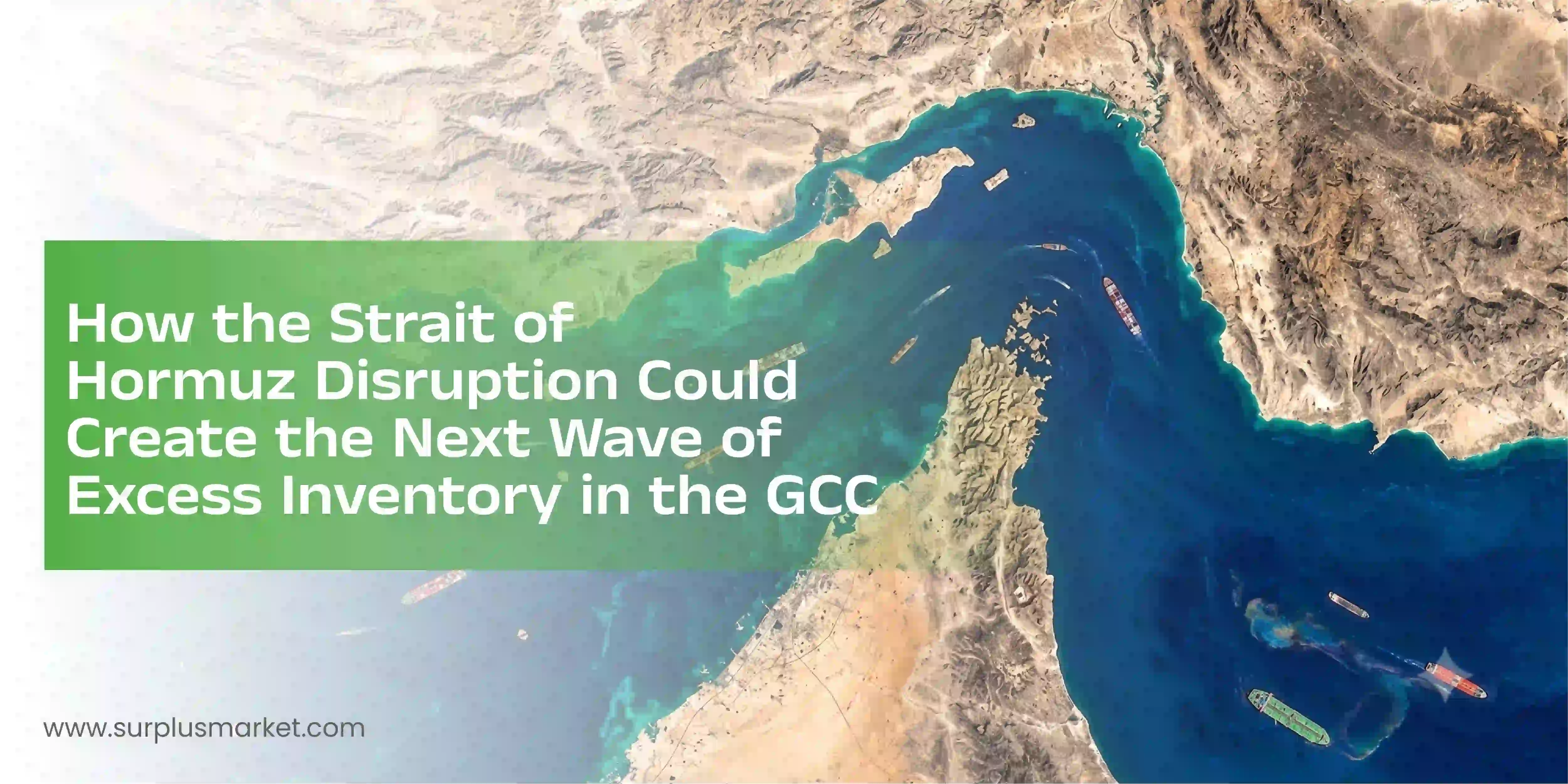

How Strait of Hormuz Disruptions Create GCC Overstock
Strait of Hormuz excess inventory and GCC excess inventory have become growing concerns as supply chain disruptions continue to affect businesses across the Gulf. Even after shipping routes reopen, delayed deliveries, emergency procurement, and changing demand patterns often leave companies with excess stock that occupies warehouse space and locks up working capital. Understanding how these disruptions unfold helps businesses respond with smarter inventory decisions instead of reacting after the problem grows.
Why the Strait of Hormuz Matters to GCC Businesses
One of the World's Most Critical Trade Routes
The Strait of Hormuz connects the Persian Gulf with the Gulf of Oman, making it one of the world's busiest maritime corridors. According to the U.S. Energy Information Administration, around 20 million barrels of oil pass through the strait daily, accounting for roughly 20% of global oil flows. Any disruption quickly affects shipping schedules, freight costs, insurance premiums, and regional trade. Beyond oil, the route also carries industrial equipment, construction materials, machinery, consumer goods, chemicals, and medical supplies. As a result, a Strait of Hormuz supply chain disruption can significantly impact inventory planning and procurement across GCC industries.
How Disruptions Affect Supply Chains
Shipping disruptions continue to affect businesses even after vessels resume operations. Port congestion, delayed deliveries, and procurement uncertainty often persist. During the recent disruption, around 600 vessels were stranded, affecting nearly 10% of global container shipping capacity, according to The Guardian. To avoid shortages, many businesses place additional orders before existing shipments arrive. Once logistics stabilize, these extra purchases often result in GCC excess inventory. To recover value, using trusted platforms to buy & sell excess inventory & overstock items instead of allowing surplus stock to remain idle is a common business practice today.
Industries Most Exposed
Certain industries are particularly vulnerable because they rely heavily on imported products. Construction suppliers depend on structural materials, electrical products, and machinery, while retailers import large volumes of consumer goods. Automotive distributors require a steady supply of spare parts, and healthcare providers stock essential medical consumables. During a GCC supply chain disruption, many businesses increase procurement to avoid shortages. If demand later stabilizes or delayed shipments arrive together, they can face significant overstock inventory GCC challenges.
The GCC's Dependence on Imported Goods
The GCC relies heavily on imported goods across industries, making businesses vulnerable to global shipping disruptions. Delays can quickly affect inventory availability and procurement plans. Regular inventory monitoring helps prevent unnecessary overstock, while connecting with reliable surplus inventory buyers enables businesses to recover value before idle stock loses demand.
How Supply Chain Disruptions Create Excess Inventory
Panic Buying and Emergency Procurement
Businesses often respond to uncertainty by placing larger or additional orders to avoid shortages. When delayed shipments and new orders arrive together after supply chains recover, warehouses can become overloaded with stock beyond actual demand. This is one of the primary causes of the Strait of Hormuz excess inventory, particularly in import-dependent industries.
The Rise of Safety Stock Strategies
Many organizations increase safety stock during periods of uncertainty to avoid operational disruptions. However, The Wall Street Journal reports that shipping flows may take four to six months to fully recover because of insurance constraints and export bottlenecks. Continued purchasing during this period can lead to significant overstock once trade normalizes. Businesses managing Qatar surplus inventory, excess inventory in Saudi Arabia, and excess stock in UAE should regularly review safety stock policies to prevent unnecessary inventory buildup.
Forecasting Errors During Market Volatility
Demand forecasting becomes more difficult during geopolitical uncertainty as customer purchasing patterns change rapidly. Temporary demand spikes and prolonged shipping delays often lead businesses to overestimate future requirements. When conditions stabilize, excess inventory remains. Using practical inventory analysis tools before placing new orders can reduce forecasting errors. Surplus Market's Inventory Calculator helps businesses evaluate inventory levels using operational data instead of assumptions.
Duplicate Orders and Supplier Diversification
Supplier diversification helps reduce procurement risk, but limited visibility across suppliers can lead to duplicate orders. When delayed shipments arrive alongside replacement purchases, businesses may face excess inventory GCC, particularly for industrial supplies and spare parts. If existing suppliers cannot fulfil requirements promptly, unnecessary duplicate purchases can be avoided by using the Request a Product option to source specific industrial items.
When Demand Normalizes but Inventory Remains
The biggest inventory challenge often appears after supply chains recover. Demand returns to normal, but warehouses remain filled with products purchased during the disruption. This ties up working capital, increases storage costs, and limits warehouse capacity. Inventory liquidation GCC strategies help businesses recover value, while a trusted surplus trading platform GCC enables them to convert idle stock into cash and connect with cost-conscious buyers.
Which GCC Sectors Could Face the Biggest Overstock Challenges?
Retail and Supermarkets
Retailers often increase purchase volumes during supply uncertainty to maintain product availability. Once supply chains stabilize, demand may not keep pace, leaving businesses with surplus inventory. Products with limited shelf life or seasonal demand are particularly vulnerable. Exploring opportunities to buy excess inventory in UAE is one of the tactics to reduce costs, where verified buyers actively source commercial surplus across multiple categories.
Construction and Industrial Suppliers
Construction businesses rely on steady supplies of steel, electrical components, machinery, and other essential materials. To avoid project delays, procurement teams often increase purchases during supply disruptions. If projects are delayed or demand changes, warehouses can accumulate unused materials. This makes surplus inventory Middle East a common challenge following major supply chain disruptions.
Automotive and Spare Parts Distributors
Automotive businesses stock large inventories to support workshops, fleet operators, and dealerships. During supply disruptions, distributors may order identical parts through multiple suppliers, resulting in duplicate stock once shipments arrive. Managing surplus early reduces storage costs and improves inventory efficiency. Platforms are available to buy excess inventory in Saudi Arabia, allowing sourcing of industrial and automotive products available within the Kingdom.
Healthcare and Medical Consumables
Healthcare organizations often increase procurement of medical consumables during periods of uncertainty to maintain uninterrupted patient care. However, changing demand can leave suppliers with excess stock. Regular inventory reviews and timely redistribution help reduce waste, optimize storage, and ensure essential products remain available when needed.
Turning Excess Inventory into an Opportunity
Recover Working Capital from Idle Stock
Unused inventory ties up working capital and increases carrying costs. Selling slow-moving stock improves cash flow and frees resources for business operations. Many companies now include resale in their inventory strategy. Connecting with verified surplus inventory buyers helps recover value while supplying quality products to businesses looking for cost-effective purchasing options.
Reduce Warehousing and Holding Costs
Excess inventory continues to generate warehousing costs through storage, insurance, handling, and facility utilization. Clearing slow-moving stock frees valuable warehouse space, reduces carrying costs, and minimizes the risk of product deterioration, obsolescence, and unnecessary inventory handling.
Reach Verified Buyers Through Surplus Marketplaces
Digital surplus marketplaces connect sellers with businesses seeking industrial materials, machinery, and commercial goods. Companies managing Strait of Hormuz excess inventory can reach verified buyers across the GCC instead of relying only on existing contacts. Various channels are also available to buy excess inventory in Qatar and beyond the region, for local and specific product requirements

Local Surplus Trading Supports Sustainability Goals
Reducing Waste Through Inventory Redistribution
Many surplus products remain fully usable but lose value simply because business priorities change. Redistributing these products extends their useful life and reduces unnecessary disposal.
Local inventory exchanges also support circular business practices by allowing one company's surplus to become another company's resource. Surplus Market Sustainability is one such initiative to encourage practical inventory reuse.
Lowering Transportation Emissions
Sourcing available inventory within the GCC reduces dependence on new international shipments for products that are already available in the region.
Shorter transportation distances can reduce logistics-related emissions while helping businesses obtain required materials more quickly. Research on how GCC businesses source surplus & overstock locally to reduce emissions highlights the environmental benefits of regional surplus trading.
Reducing Textile and Electronic Waste
Excess inventory affects industries well beyond industrial supplies. Fashion products, textiles, consumer electronics, and electrical equipment frequently become surplus because of changing demand, discontinued product lines, or procurement adjustments.
Keeping these products in circulation helps reduce unnecessary waste while improving resource efficiency. The growing challenge of fashion industry waste demonstrates why extending product life has become increasingly important.
Why Surplus Is Becoming a Strategic Asset
Businesses increasingly recognize that to buy and sell excess inventory is not simply a storage issue. Managed effectively, it becomes an operational asset that supports cash flow, sustainability objectives, and stronger inventory planning.
Organizations that regularly evaluate slow-moving stock are often better prepared for future market disruptions because they maintain healthier inventory levels and greater warehouse flexibility. Insights shared in Why Surplus is the New Strategic Asset explain why many businesses now view surplus management as an important part of long-term business planning.

How GCC Businesses Can Prepare for Future Supply Chain Shocks
Improve Inventory Visibility Across Operations
Real-time inventory visibility allows businesses to identify slow-moving stock before it becomes a larger financial burden. Consolidating inventory data across warehouses, branches, and procurement teams helps decision-makers respond quickly when market conditions change. Better visibility also supports faster redistribution of products that are no longer required in one location but remain valuable elsewhere.
Invest in Better Demand Forecasting
Forecasting should combine historical sales data with current market trends, supplier lead times, and external risks. Businesses that regularly update forecasts are better positioned to avoid unnecessary purchasing during periods of uncertainty. Reviewing forecasts frequently also reduces the likelihood of creating GCC excess inventory after temporary demand spikes.
Diversify Suppliers Without Overordering
Working with multiple suppliers helps reduce procurement risk, but purchasing controls should remain equally strong. Centralized approval processes and clear visibility into existing purchase orders can prevent duplicate orders that often contribute to Strait of Hormuz excess inventory. A balanced sourcing strategy improves supply security without increasing unnecessary stock levels.
Conduct Regular Inventory Audits
Routine inventory audits help businesses identify obsolete, slow-moving, and excess products before storage costs continue to rise. Scheduled reviews also improve inventory accuracy and support better purchasing decisions during periods of market volatility. Companies that perform regular audits are generally able to respond faster when supply chain conditions change.
Develop a Surplus Exit Strategy
Every organization should have a defined process for handling excess inventory. Waiting until warehouses reach capacity often reduces resale opportunities and increases holding costs.
A surplus exit strategy may include regular inventory reviews, internal redistribution, resale through verified marketplaces, and periodic performance tracking. Having this process in place allows businesses to respond quickly when GCC excess inventory begins to accumulate instead of treating surplus as an unexpected issue.
Use Inventory Planning Tools and Calculators
Inventory decisions become stronger when supported by measurable data rather than assumptions. Planning tools help businesses determine appropriate stock levels, evaluate carrying costs, and estimate reorder quantities based on operational requirements.
Using practical resources such as an inventory calculator also helps procurement teams maintain healthier inventory levels while reducing the long-term impact of supply chain risk GCC.
FAQ
1. What is the Strait of Hormuz, and why is it important to the GCC?
The Strait of Hormuz is a major global shipping route connecting the Persian Gulf with the Gulf of Oman. It is vital for GCC trade, as it handles large volumes of oil, industrial goods, machinery, and consumer products.
2. How can disruptions in the Strait of Hormuz lead to excess inventory in the GCC?
A Strait of Hormuz supply chain disruption often triggers emergency purchasing and higher safety stock. When delayed shipments eventually arrive, businesses may end up with Strait of Hormuz excess inventory.
3. Which GCC industries are most at risk of overstock and surplus inventory?
Retail, construction, automotive, healthcare, and industrial suppliers are among the sectors most vulnerable because they depend heavily on imported products and large inventory volumes.
4. How can businesses recover value from excess inventory after supply chain disruptions?
Businesses can recover value by identifying slow-moving stock early and selling usable surplus through trusted B2B surplus marketplaces, improving cash flow and reducing storage costs.
5. Can local surplus trading help GCC businesses reduce costs and emissions?
Yes. Local surplus trading reduces warehousing costs, limits unnecessary imports, lowers transportation emissions, and extends the life of usable products.
6. What can companies do to prepare for future supply chain disruptions and avoid excess stock?
Businesses should improve inventory visibility, strengthen demand forecasting, conduct regular inventory audits, diversify suppliers responsibly, and maintain a clear surplus management strategy.