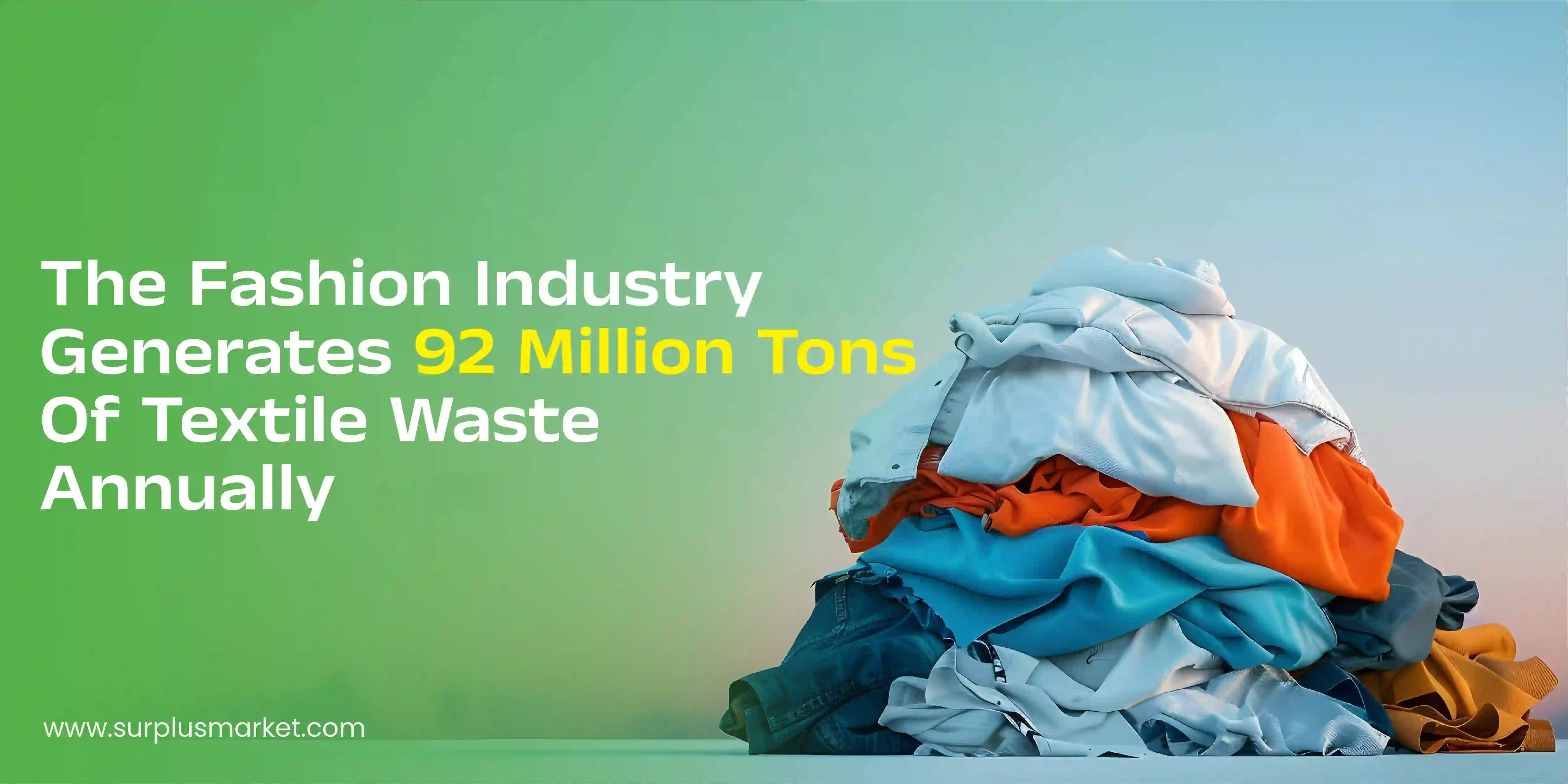

The Fashion Industry Generates 92 Million Tons of Textile Waste Annually
Textile waste has become one of the most pressing environmental concerns today, with the fashion industry alone generating nearly 92 million tonnes of textile waste every year. This growing volume reflects changing consumption habits, rapid production cycles, and inefficient textile waste management systems. As global demand for fashion continues to grow, understanding textile waste, its causes, and how to reduce textile waste is essential. Surplus Market sustainability is emerging as a practical approach for businesses and consumers to reduce excess and extend product life cycles.
What is Textile Waste?
For those who are yet to understand what is textile waste, it refers to discarded materials derived from fabrics, garments, and textile production processes. It includes everything that is no longer used or cannot be reused in its original form, contributing significantly to global textile waste statistics.
For businesses looking to manage surplus responsibly, connecting with genuine surplus inventory buyers offers practical ways to redirect unused stock into active markets instead of letting it become waste. For those who want to buy textile waste or recycle wasted textiles, surplus marketplaces create direct access to available materials while supporting responsible reuse. This reduces the effects of textile waste while reinforcing key facts about textile waste and the value of reuse.
Definition and Types of Textile Waste
Textile waste includes fibers, yarns, fabrics, and finished garments that are discarded during manufacturing or after consumer use. It is broadly categorized into production waste and post-use waste. Production waste arises during cutting, dyeing, and finishing processes, while post-use waste includes worn-out or discarded clothing.
Understanding these categories is essential for effective textile waste recycling and improving textile waste management practices.
Pre-consumer vs Post-consumer Textile Waste
Pre-consumer textile waste is generated during manufacturing stages such as cutting scraps, defective fabrics, and unsold inventory. Post-consumer textile waste comes from households and includes used garments that are thrown away or donated.
Efficient redistribution platforms that buy & sell excess inventory & overstock items help reduce pre-consumer waste by connecting excess stock with buyers.
Common Materials Contributing to Waste (Cotton, Polyester, etc.)
Cotton textile waste and synthetic fibers such as polyester dominate the waste stream. Cotton requires intensive water usage, while polyester contributes to microplastic pollution. Mixed fabrics further complicate the recycling of textile waste, making the disposal of textile waste more challenging.
Textile Waste Statistics & Global Impact
The scale of global textile waste highlights the urgency for better textile waste reduction strategies and circular systems.
To estimate and manage excess materials effectively, businesses can use tools like the inventory calculator to track surplus and reduce unnecessary waste.
How Much Textile Waste is Produced Each Year?
Globally, around 92 million tonnes of textile waste is generated annually. If current trends continue, this number is expected to increase significantly. According to Earth.Org: Fast Fashion Impact 2026, the fashion sector contributes nearly 10% of global carbon emissions, making it one of the largest polluting industries.
These textile waste statistics underline the need for better recycling of textile waste and responsible production.
Textile Waste in India and Global Markets
Textile waste in India is rising due to fast-growing consumption and manufacturing output. In 2026, India introduced updated Solid Waste Management Rules requiring four-stream segregation, directly impacting textile waste management in India.
Across global markets, surplus redistribution is gaining attention. Businesses in the Middle East can explore options to buy excess inventory in Qatar to reduce unsold stock accumulation.
Causes of Textile Waste in the Fashion Industry
The causes of textile waste are deeply rooted in production practices, consumer behavior, and supply chain inefficiencies.
Insights such as why surplus is the new strategic asset highlight how unused inventory can be repositioned instead of discarded.
Fast Fashion and Textile Waste Growth
Fast fashion textile waste has grown due to rapid production cycles and low-cost garments. Consumers purchase more frequently and discard items quickly, increasing fashion textile waste.
This model accelerates textile waste generation and places pressure on recycling systems that are not equipped to handle such volumes.
Overstock, Unsold Inventory, and Production Waste
Unsold inventory remains a major contributor to textile waste. 2026 Atacama Case Study in the Fashion Law Journal, the Atacama Desert landfill in Chile became a global symbol of waste, with new garments bearing tags illegally dumped there. In 2025, Chile introduced a national strategy to eliminate such dumping practices. Businesses in regions like the UAE can reduce such waste through resale channels that buy and sell excess inventory in UAE.
Environmental Impact of Textile Waste
The Fashion Value Chain (2026) suggests that the impact of textile waste on environment is severe and far-reaching. Producing a single cotton T-shirt requires around 2,700 liters of water, equivalent to one person’s lifetime drinking water.
Synthetic textiles contribute to 35% of primary microplastics in oceans, as per HORIBA Scientific Resources. Additionally, the fashion industry accounts for nearly 10% of global CO2 emissions, as per the UNFCCC Fashion Industry Charter.
Effective surplus management reduces waste and carbon footprint, demonstrating how it can directly lower emissions and environmental damage.
Where Does Textile Waste Go?
A large portion of textile waste ends up in landfills or is incinerated, contributing to pollution and resource loss.
GCC businesses source surplus & overstock locally to reduce emissions, helping to minimize transportation impact and reduce waste accumulation.
Landfills vs Recycling vs Resale Markets
Landfills remain the primary destination for textile waste, where materials take decades to decompose. Recycling converts textiles and textiles waste into new materials, though it remains limited due to fiber complexity. Resale markets provide a practical solution by extending product life cycles.
In sectors like construction, effective handling of construction surplus is already evolving, showing how to reuse textile waste significantly.

How to Reduce Textile Waste (Practical Solutions)
Reducing textile waste requires a mix of better consumption habits, improved recycling systems, and efficient redistribution networks.
Businesses can buy excess inventory in Saudi Arabia, and explore other sourcing operations to make use of existing surplus rather than producing new goods.
Reuse, Resell, and Circular Economy
Circular fashion is gaining momentum, with the market projected to reach $7.04 billion by 2026, growing at a CAGR of 8.7%, based on Research and Markets (2026 Forecast). Reuse and resale extend product lifecycles and reduce the need for new production.
Consumers and businesses both play a role in reducing textile waste through mindful purchasing and resale participation.
Role of Surplus Marketplaces in Waste Reduction
Surplus marketplaces enable efficient textile waste management market by connecting excess inventory with buyers who can use it productively. This reduces the disposal of textile waste and promotes textile waste reduction at scale.
For businesses with specific sourcing needs, options to request a product and other services make it easier to find required materials without contributing to new production.
FAQs
- What is textile waste?
Textile waste can be discarded fabrics, garments, or textile materials generated during production or after consumer use. Or else, it can be left over from overproduction, which is often categorized as textile surplus. - How many tons of textile waste is generated every year?
Every year, approximately 92 million tonnes of textile waste are produced globally. - What causes textile waste in fashion?
The major causes for textile waste getting piling up include fast fashion, overproduction, unsold inventory, and inefficient recycling systems. - How can textile waste be reduced?
Through reuse, resale, recycling, and improved inventory management, reducing textile waste is possible. - Where does textile waste go?
Most of the textile waste ends up in landfills or is incinerated. However, a smaller portion is recycled or resold. - What is textile recycling?
The process of textile recycling involves converting old fabrics into new materials or products to reduce waste. - How can businesses manage textile waste efficiently?
To manage textile waste efficiently, businesses can adopt better inventory control, use surplus marketplaces, and implement circular economy practices.